The Ultimate Morning Stretch Routine To Start Your Day In 2026
By:Author:Nord Pilates Editorial
Updated on:October 20, 2026
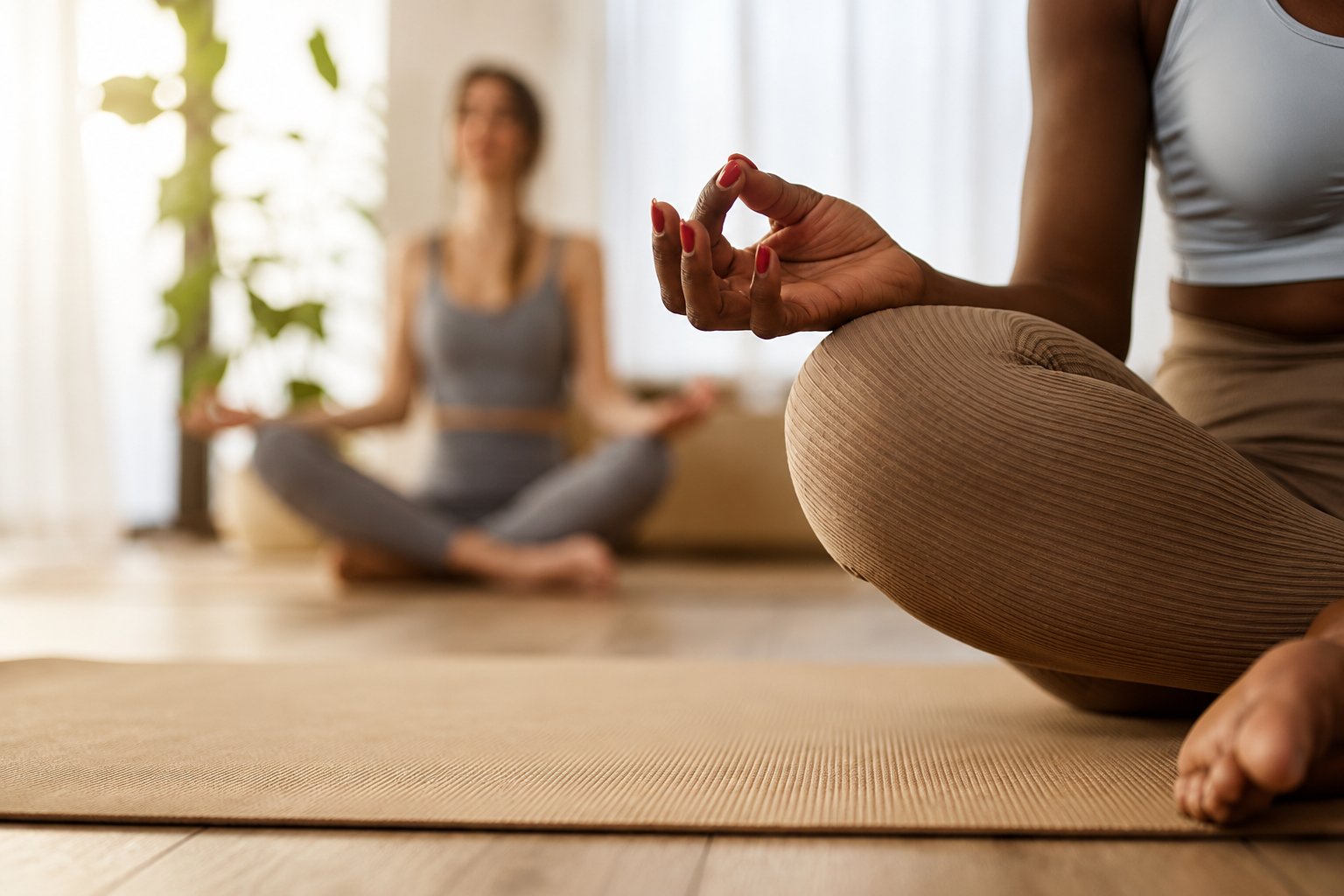
Waking up with stiff joints and a groggy mind is a common experience that can dictate the mood of your entire day. A strategic morning stretch routine transforms this transition by physically signaling your body that it is time to activate.
This guide outlines a progressive sequence designed to move you from bed to standing with ease. It covers physiological benefits, specific movements, and safety tips to ensure you wake up energized.
Why Prioritize a Morning Stretch Routine?
Understanding the physiological reasons for morning stiffness can help you appreciate the immediate benefits of movement. Research suggests that overnight immobility leads to fluid accumulation in the joints and a slight drop in body temperature.
Boosting Blood Circulation
Gentle movement accelerates the delivery of oxygen and nutrients to lethargic muscles effectively. This process relies on vasodilation and an increased heart rate to flush out metabolic waste.
Light activity specifically boosts cerebral blood flow, which is crucial for mental clarity. This helps clear 'sleep inertia' significantly faster than sedentary waking.

Lubricating Stiffness Away
Movement stimulates the production and distribution of synovial fluid within the joint capsules. During sleep, this fluid can settle and thicken, causing that familiar 'creaky' sensation.
Morning motion acts like oil in an engine to reduce friction in the joints. This lubrication process prepares your skeletal system for the load of the day.
Activating the Nervous System
A calm, focused routine engages the parasympathetic nervous system to manage cortisol levels effectively. This shift moves the body from a sleep state to an alert, ready state without spiking stress.
Starting the day with intentional movement provides a psychological 'win' before 9:00 AM. Once you understand the 'why,' you can begin with the path of least resistance.
Gentle In-Bed Stretches for a Soft Start
You do not need to leave your mattress to begin mobilizing your spine and hips. These low-impact movements bridge the gap between deep sleep and wakefulness.
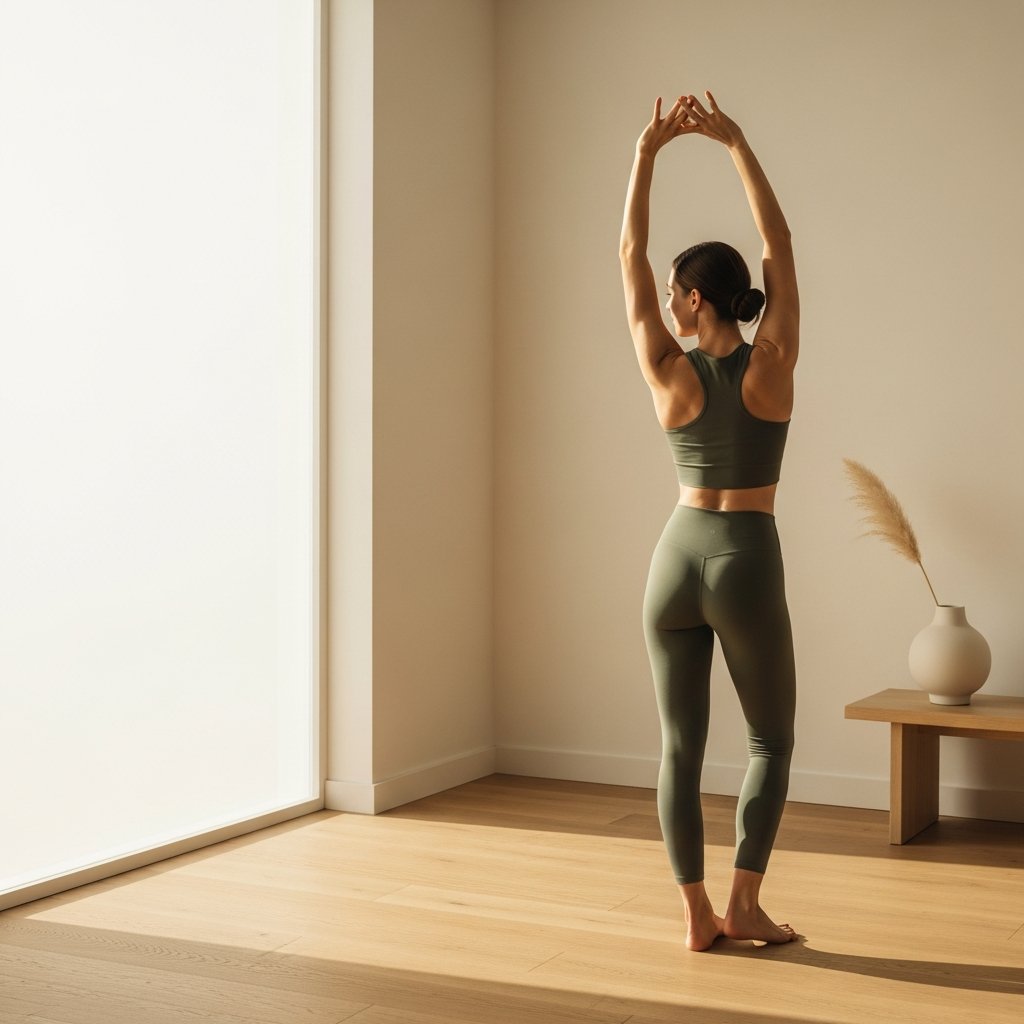
Full-Body Elongation
This simple action decompress the spine and opens the front body after hours of curling up. It is the most natural way to signal the start of the day.
How to elongate
- Reach - Extend your arms overhead and point your toes toward the foot of the bed.
- Hold - Maintain this tension for 10–15 seconds to maximize the stretch.
- Release - Exhale deeply and let your body soften back into the mattress.
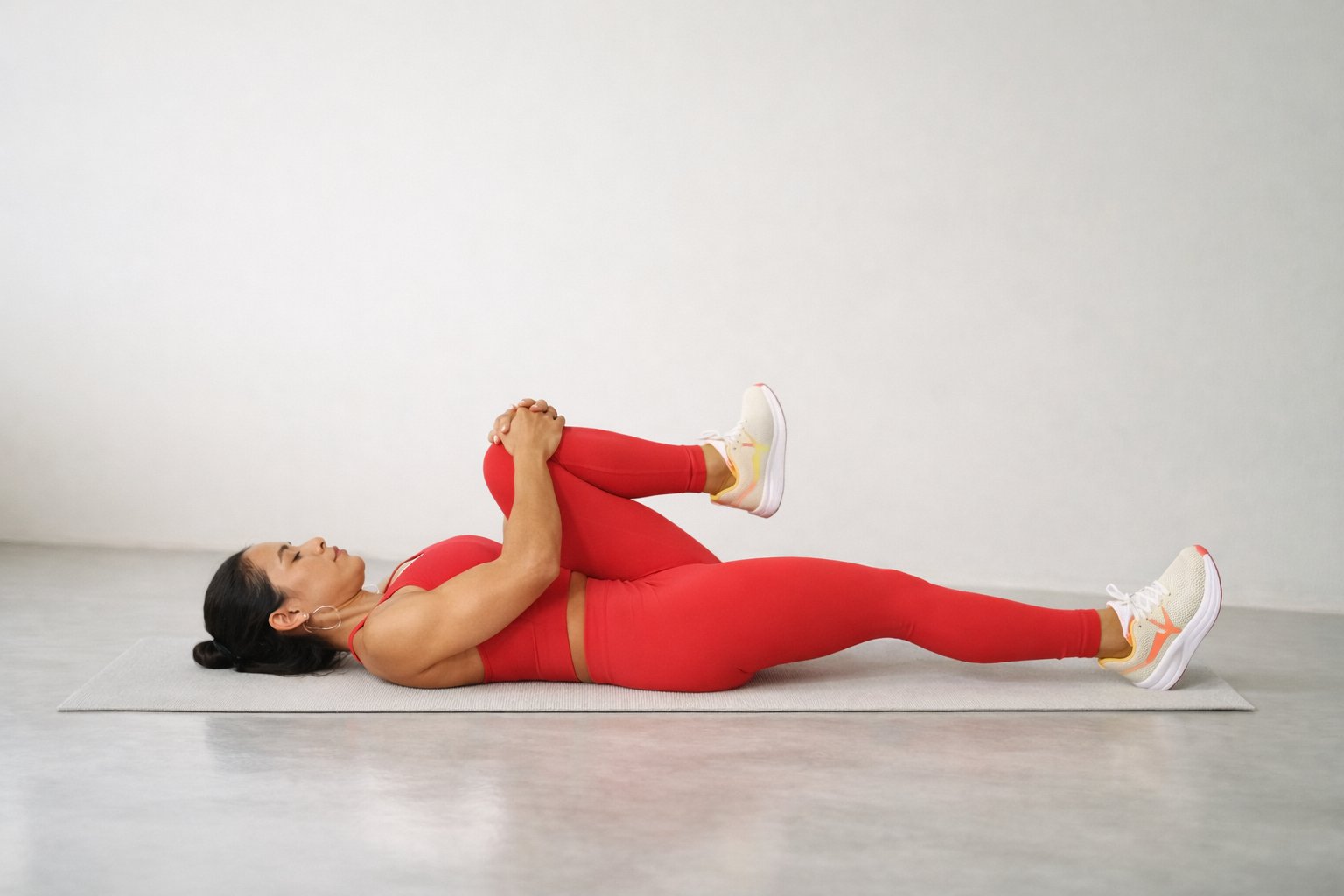
Double Knee-to-Chest Hug
Drawing the knees to the chest relieves lumbar tightness accumulated during the night. Keep your head on the pillow to avoid straining the neck.
Gently rock side-to-side to massage the lower back muscles against the mattress. Perform 3–5 gentle rocks before releasing the legs.
Supine Spinal Twist
This movement mobilizes the thoracic spine and can aid morning digestion. Drop your knees to one side while keeping your shoulders grounded firmly.
Hold for 3 deep breath cycles on each side to fully open the chest. Ensure the movement is slow and controlled to protect the lower back.

Seated Neck Rolls
Releasing tension in the upper trapezius is vital for those who wake up with shoulder stiffness. Sit on the edge of the bed and perform slow, controlled rotations.
Avoid rolling the head all the way back to protect the cervical spine. Limit the movement to semi-circles if you are prone to neck pain.
Seated Forward Reach
This fold stretches the hamstrings and posterior chain while seated. The goal is not to touch your toes but to feel a mild release in the back.
Keep your knees soft and aim for a 20-second gentle hold. Using a guidance tool like Nord Pilates can help time these holds correctly so you don't rush.
Dynamic Floor & Standing Routine for Energy
Once out of bed, gravity-based movements can further increase heart rate and prepare the major muscle groups. Experts recommend dynamic stretching over static holds when the body is still warming up.
Cat-Cow Flow
This classic sequence awakens the entire spinal column through flexion and extension. Synchronize your breath with the movement for 10 full cycles.
Performing the flow
- Cow - Inhale as you drop your belly and lift your gaze.
- Cat - Exhale as you round your spine toward the ceiling.
- Transition - Move fluidly between the two shapes without pausing.
Thread the Needle
Slide one arm under the torso from a tabletop position to open the shoulders and upper back. This is particularly beneficial for side sleepers or desk workers.
Focus on rotating from the thoracic spine rather than the lower back. Perform 5 dynamic pulses per side to loosen the area.
Enhancing Your Flow With Digital Guidance
Building a consistent habit is easier when you do not have to memorize every step. Nord Pilates offers personalized plans that guide you through low-impact workouts tailored to your morning energy levels.
The app features audio and video instructions that ensure you maintain proper form, which is critical when exercising alone. By following a structured plan, you remove decision fatigue and ensure a balanced session.
Quick start with Nord Pilates
- Selection - Open the app and choose a 'Morning Mobility' session.
- Setup - Position your phone where you can easily see the video cues.
- Execution - Follow the real-time pacing to ensure full range of motion.
- Tracking - Log the workout to build your daily habit streak.
Downward-Facing Dog Walk-Out
This inversion stretches the posterior chain, including the calves and hamstrings. It also strengthens the shoulders as they support your body weight.
Pedal the feet by alternating heel presses toward the floor. Continue this walking motion for 30 seconds to wake up the legs.
Standing Side Bend
Standing with feet hip-width apart, reach one arm overhead to expand lung capacity. This stretches the intercostal muscles between the ribs.
Keep the chest open rather than collapsing forward during the reach. Perform 5 reaches per side to fully open the torso.
Dynamic Runner’s Lunge
Step into a lunge to open tight hip flexors that are often shortened during sleep. Adding a gentle pulse or twist increases the effectiveness.
Keep the back knee soft and off the ground if possible for active engagement. This prepares the hips for walking and sitting throughout the day.
Best Practices for a Safe Routine
The quality of your movement matters more than the duration of the session. Following basic safety protocols ensures you gain mobility benefits without risking strain.
Dynamic vs. Static Stretching
It is crucial to know when to apply different stretching techniques. Dynamic stretching involves movement and is safer for cold muscles than static holding.
| Type | Best For | Morning Suitability |
|---|---|---|
Dynamic | Warming Up | Excellent |
Static | Cooling Down | Use Caution |
The Role of Breathwork
Deep diaphragmatic breathing signals the nervous system to release tension in the muscles. A 4-count inhale and 4-count exhale rhythm is ideal for this routine.
Services like Nord Pilates often integrate specific breathing cues into their guided sessions. This ensures your diaphragm is fully engaged, maximizing the oxygenation of your tissues.
Consistency Over Intensity
A 5-minute daily routine is physiologically superior to sporadic hour-long sessions. 'Micro-habits' are easier to adhere to on busy mornings.
Digital tools with habit trackers, such as Nord Pilates, can visualize your streak and provide motivation. Seeing your progress builds the psychological momentum needed to persist.
Modifications and Safety Precautions
Stretching is generally safe, but certain conditions require adapted movements. Listening to your body’s limits is the most reliable guide for long-term joint health.
Adjusting for Back Pain
To protect the lumbar spine, bend your knees deeply during any forward folds. Using a wall for balance during lunges can also reduce strain.
Avoid extreme twisting motions if you have existing disc issues. Focus on elongation rather than rotation in these cases.
Warming Up Considerations
Very cold muscles are less elastic and more prone to injury. March in place for 60 seconds to generate heat if your room is cold.
Taking a warm shower before deep stretching is another effective way to prepare the tissues. Never force a stretch when the body feels cold or stiff.
When to Seek Professional Care
Certain symptoms act as red flags that require medical attention. Sharp, shooting pain (radiculopathy) or numbness should never be ignored.
If pain persists even when you are at rest, consult a healthcare provider. A stretch routine should create tension, but never sharp pain.
The Final Take
Establishing a morning stretch routine is a simple yet powerful investment in your long-term mobility. By starting with gentle in-bed movements and progressing to dynamic flows, you set a positive tone for the day.
Whether you choose a simple 5-minute flow or use a guided app like Nord Pilates for a comprehensive session, the key is regularity. Consistent morning movement creates a foundation for better energy and focus.
FAQ
How long should a morning stretch routine take?
An effective routine can take as little as 5 to 10 minutes. Consistency is more important than duration for maintaining mobility.
Should I stretch before or after my morning coffee?
It is generally better to hydrate with water and stretch before coffee. Caffeine is a vasoconstrictor, while stretching aims to improve blood flow.
Is it okay to do this routine every day?
Yes, daily mobility work is beneficial for joint health and stiffness reduction. Listen to your body and adjust intensity if you feel fatigued.
Can stretching replace a cardio workout?
Gentle stretching does not replace cardiovascular training, but it complements it. For a more complete workout, the structured plans in Nord Pilates offer varied intensity levels that can elevate your heart rate.
Share this post