What Do I Need To Do Pilates At Home? A Complete Guide For 2026
By:Author:Nord Pilates Editorial
Updated on:October 20, 2026
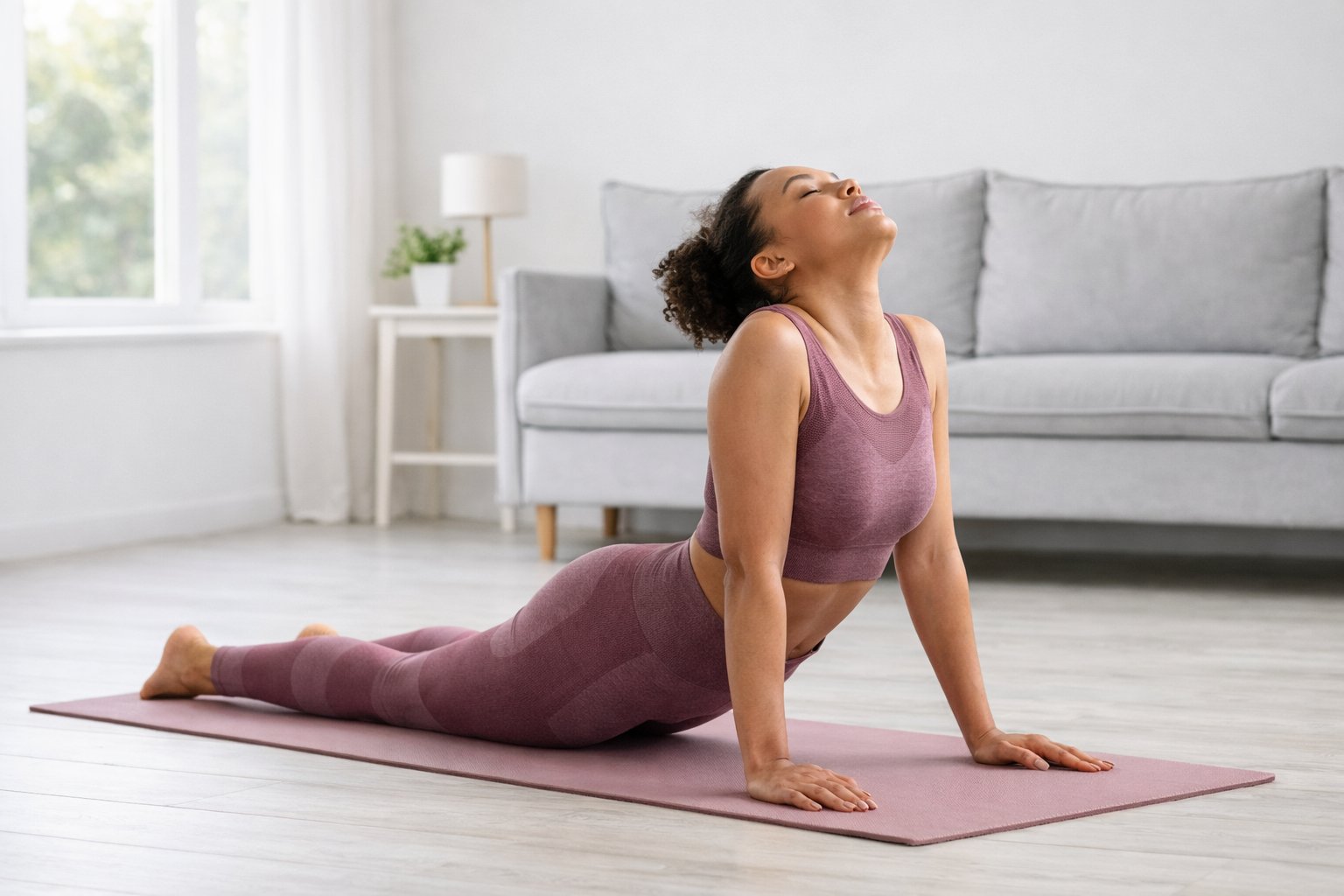
Building a strong, flexible body from the comfort of your living room is more accessible than many realize. You primarily need a high-density mat and enough floor space to move your limbs freely.
While large studio equipment is famous, the mat repertoire is actually the foundation of the entire Pilates method. With just a few strategic items, you can replicate the intensity of a studio class.
The Absolute Essentials to Start
Before investing in accessories, focus on the foundational items that ensure safety and comfort. Most beginners already possess the basics required to launch a consistent mat practice.
A High-Density Pilates Mat
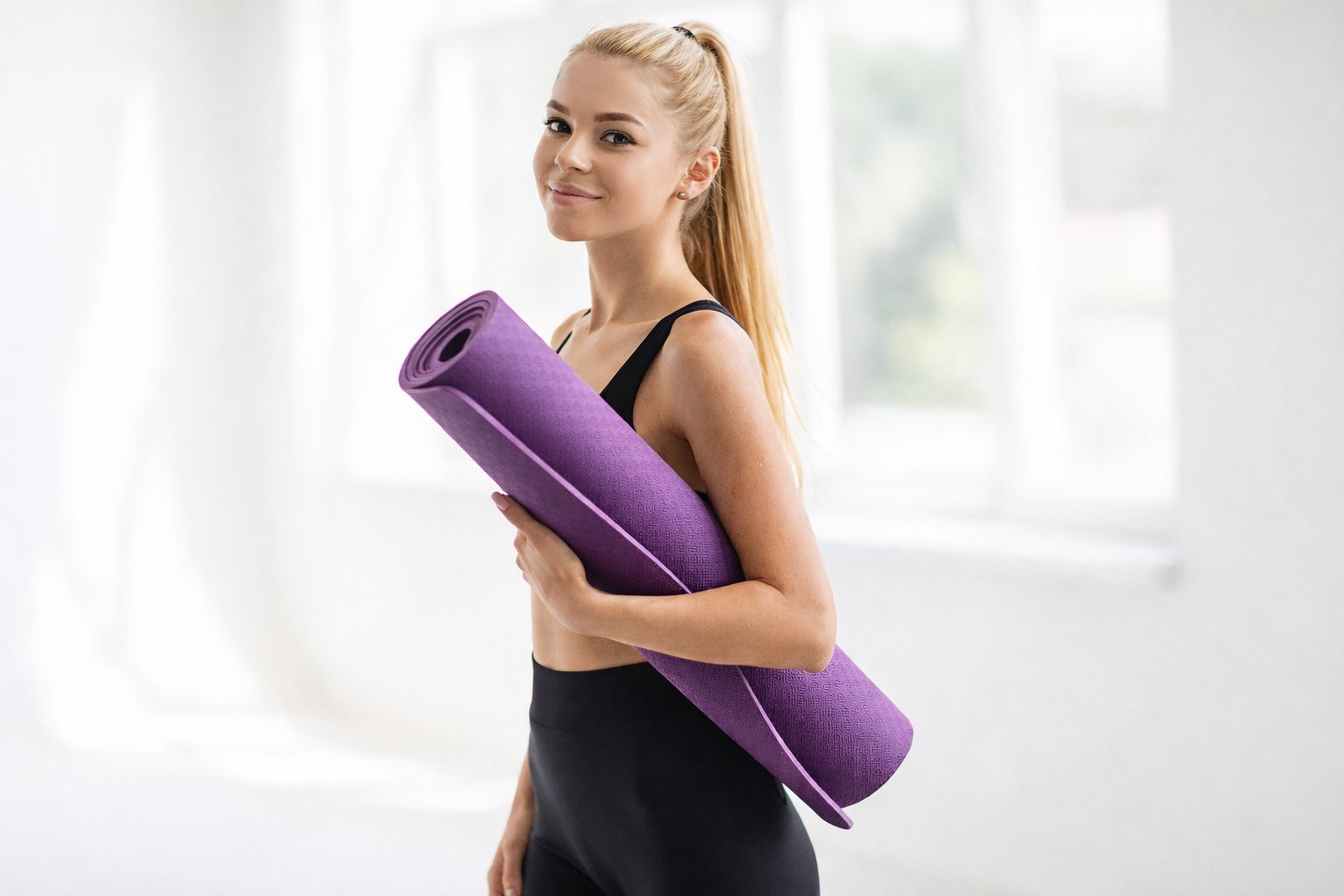
Prioritize spinal protection by selecting a mat specifically designed for Pilates, which is typically 1/2 inch to 5/8 inch thick. Unlike standard 1/8-inch yoga mats, this extra density cushions the vertebrae during rolling exercises like 'The Hundred' or 'Rolling Like a Ball.'
Using a thinner mat on hard floors often leads to bruising or tailbone discomfort. A proper mat ensures you can focus on abdominal engagement rather than floor impact.
Form-Fitting Activewear
Wear clothes that hug the body, such as leggings and fitted tanks, rather than loose t-shirts or shorts. Form-fitting attire allows you to clearly see the alignment of the hips, ribs, and shoulders during movement.
Bulky clothing can obscure spinal curvature, making it difficult to identify and correct form errors. Seeing your body mechanics is the first step to self-correction.
Adequate Floor Space
Clear a dedicated workout area roughly 6 by 8 feet to ensure unrestricted movement. You need enough clearance to extend your arms and legs fully to the sides and overhead without striking furniture or walls.
A cramped space forces you to shorten movements, which can compromise the full range of motion required for effective muscle lengthening. Ensure the area is free of tripping hazards.
Recommended Props to Deepen the Practice
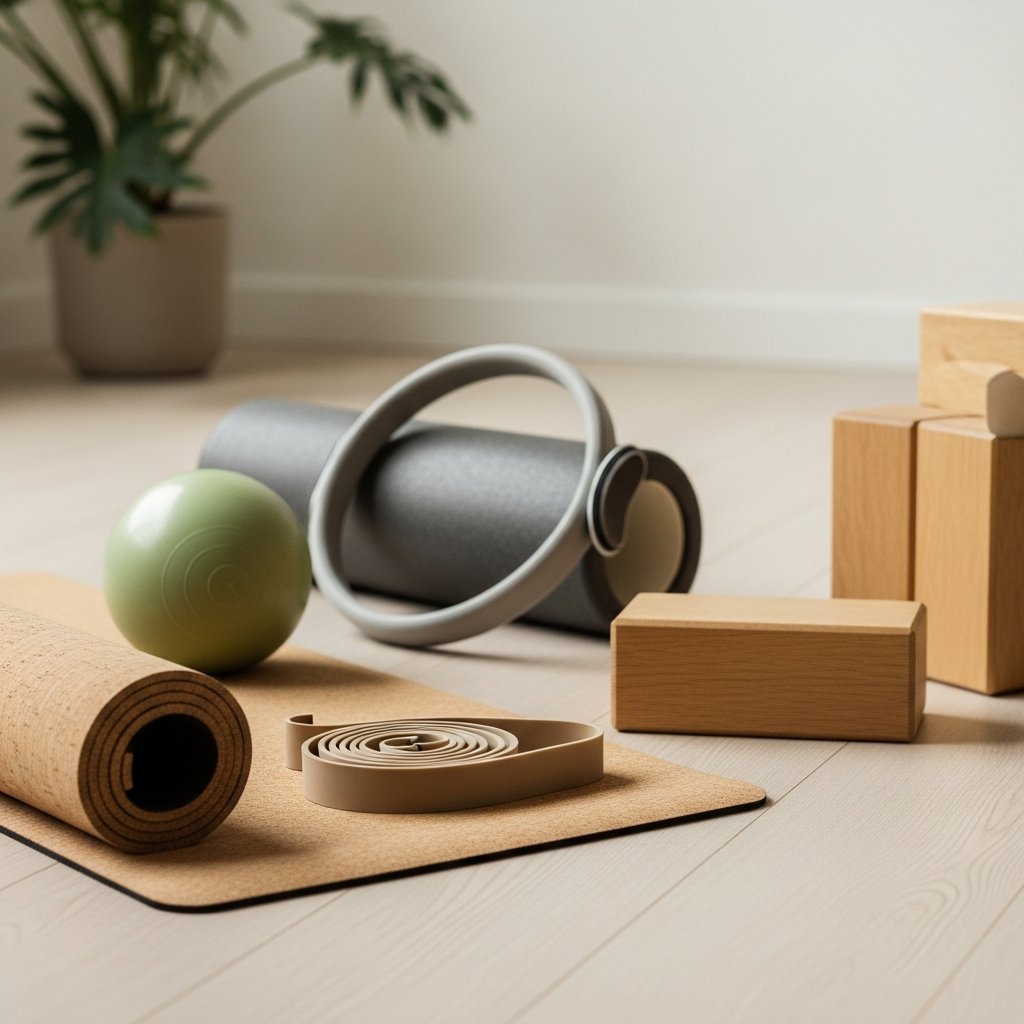
While not strictly mandatory, specific props can dramatically increase muscle engagement and mimic the resistance of studio equipment like the Reformer. Integrating these inexpensive tools can prevent plateaus and enhance proprioception.
Key Props for Resistance
- The Pilates Ring - Adds resistance to adduction (squeezing) exercises to target the inner thighs and pelvic floor.
- Loop Resistance Bands - Increases glute activation during side-lying series and bridges.
- Mini Stability Ball - Deepens core engagement when placed under the sacrum or between the knees.
- Light Hand Weights - Builds upper body endurance with high repetitions, typically using 1-3 lb weights.
Grip Socks
Wear grip socks with rubberized soles to ensure safety and stability on smooth surfaces. These socks prevent slipping on hardwood floors or mats, providing the traction needed for holding planks or standing balance work.
They also offer a hygienic barrier if you eventually visit a shared studio space. Proper foot traction allows for more confident transitions between exercises.
| Prop | Primary Benefit |
|---|---|
Magic Circle | Centerline Connection |
Loop Band | Glute Activation |
Mini Ball | Core Stability |
1-3lb Weights | Arm Endurance |
Selecting the Right Digital Instruction
Without a teacher physically present to correct your form, the source of your instruction is critical for safety and results. Modern digital platforms offer varied ways to learn, from structured courses to casual follow-alongs.
Structured Beginner Programs
Start with programs specifically labeled 'beginner' or 'foundations' to master the basics safely. These series break down essential breathing patterns and neutral spine alignment before introducing complex flows.
Rushing into intermediate classes often leads to poor form, whereas a foundational course might spend 10 minutes just on pelvic placement. Patience in the beginning accelerates progress later.
Personalized Digital Guidance
For those practicing at home, Nord Pilates offers personalized workout plans that adapt to your fitness level automatically. The app tracks progress across sessions, adjusting difficulty as core strength develops.
What sets it apart is the clear audio and video guidance that helps prevent the alignment mistakes common among self-taught practitioners. A user simply inputs their goals, and the system generates a tailored sequence that evolves with their capabilities.
The daily habit tracker is particularly useful for building consistency in the first month. By providing structured challenges, Nord Pilates removes the guesswork of deciding which workout to do next.
YouTube and Free Content Considerations
Verify the credentials of YouTube instructors before following their routines. Look for teachers who state they are comprehensively certified (often 450+ hours of training) to ensure cues are anatomically sound.
While free content is abundant, following an uncertified influencer can lead to strain, particularly in the lower back. Quality instruction prioritizes safety cues over aesthetic promises.
Creating a Functional Home Studio Atmosphere
Your environment influences your focus and ability to maintain proper form. A few strategic adjustments to your room can transform a chaotic corner into a serene and effective workout zone.
Using Mirrors for Self-Correction
Position a full-length mirror sideways to your mat to act as your own visual guide. Glancing at your profile view allows you to spot common errors like an arched lower back, tucked pelvis, or jutting chin.
This immediate visual feedback helps you self-correct alignment in the absence of a physical teacher. It bridges the gap between what you feel and what your body is actually doing.
Minimizing Distractions
Establish a 'do not disturb' protocol by silencing phones and informing household members of your schedule. Pilates requires deep concentration—often called the mind-body connection—to be effective.
Tools like Nord Pilates support this focus by providing continuous audio cues, allowing you to follow the flow without constantly craning your neck to look at a screen. Even a 5-minute interruption can break the flow and reduce the neuromuscular benefits of the session.
Safety and Physical Preparation
Pilates is low-impact, but it is not without risk if performed incorrectly. Understanding your body's limits and preparing adequately is just as important as the equipment you buy.
Prioritizing the Warm-Up
Dedicate the first 5-10 minutes to a proper warm-up before attempting advanced moves like 'The Teaser.' Engage in gentle spinal articulation, such as pelvic curls and cat-cows, to lubricate the joints and prepare the nervous system.
Guided Warm-Up Routine
A proper warm-up sets the tone for the entire session. Here is a simple activation sequence using Nord Pilates:
Activation Steps
- Selection - Open the app and select a 'Mobility' or 'Warm-up' module.
- Breathing - Follow the audio cues to establish deep lateral breathing.
- Articulation - Execute the guided pelvic curls to mobilize the lower spine.
- Connection - Complete the abdominal prep series to fire up the core before loading the limbs.
Listening to Your Body
Monitor your physical sensations to distinguish between muscle fatigue and injury. Stop immediately if you feel sharp, shooting pain in the neck or back, or experience numbness in the extremities.
Modifying exercises (e.g., bending knees in 'The Hundred') is a sign of body awareness, not weakness. Consistent practice at a lower intensity often yields better long-term results than forcing advanced positions.
The Final Take
Starting a Pilates practice at home requires minimal equipment but demands attention to detail and consistency. By securing a supportive mat, creating space, and utilizing reliable instruction, you build a sustainable wellness habit.
Platforms like Nord Pilates can bridge the gap between studio guidance and home convenience, ensuring your form remains safe as you progress. The most important step is simply rolling out your mat and beginning.
FAQ
Can I do Pilates at home without any equipment?
Yes, mat Pilates is highly effective using body weight alone. While props add variety and resistance, the fundamental exercises were designed to be performed on a simple mat.
How often should I do Pilates to see results?
Most experts recommend practicing 3 to 4 times per week for noticeable changes in strength and posture. Consistency is more important than duration; short daily sessions can be very effective.
Is a yoga mat okay for Pilates?
Standard yoga mats are often too thin (1/8 inch) and may cause discomfort during rolling exercises. A thicker Pilates mat (1/2 inch) is recommended to protect the spine and joints.
Do I need a Reformer for home Pilates?
No, a Reformer is not required for a home practice. Mat Pilates covers the same principles of movement, and small props like bands and rings can simulate machine resistance effectively.
Share this post